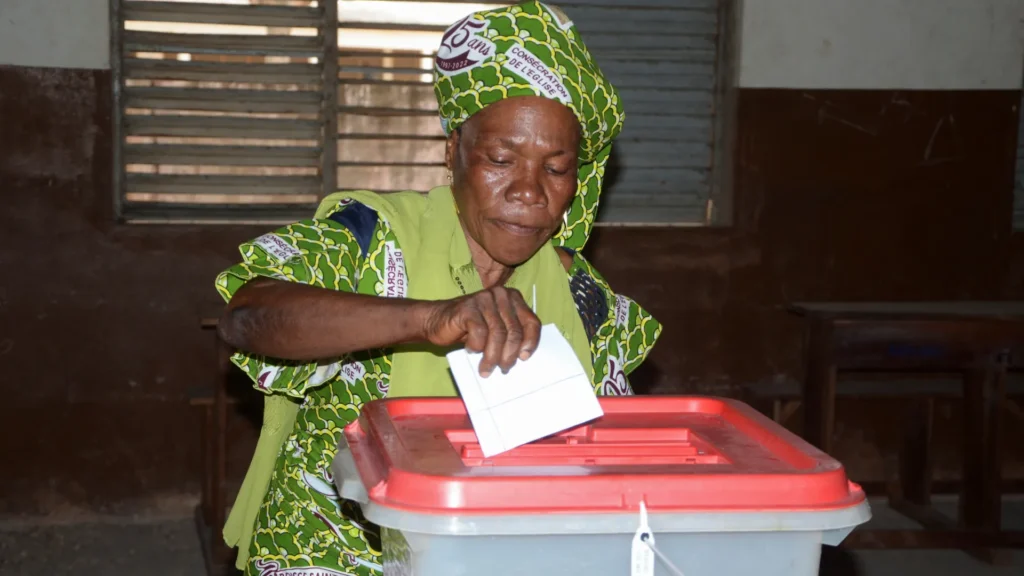
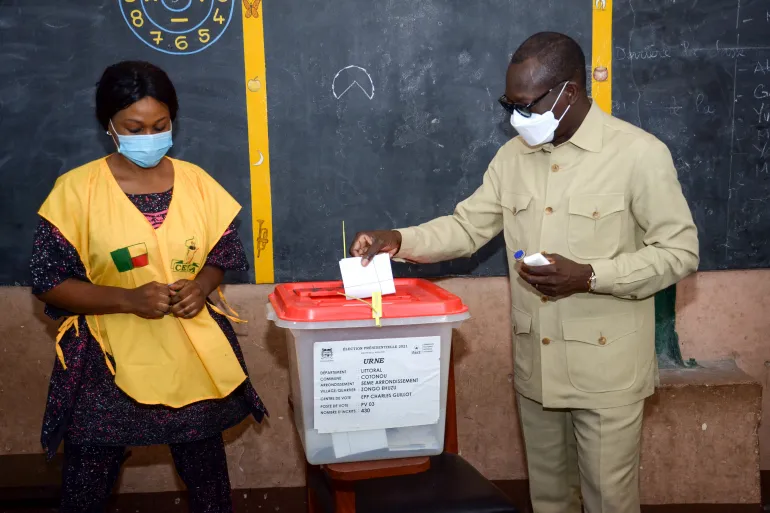
Voters in Benin are set to go to the polls on April 12, 2026, in a closely watched presidential election that marks the end of President Patrice Talon’s second and final term in office. The vote comes at a critical moment for the country, shaped by rising insecurity in the north and ongoing debate about political inclusion.
President Patrice Talon, who has been in power since 2016, is stepping down in line with constitutional term limits after a decade that has seen both economic growth and increasing criticism over restrictions on opposition politics. 
The election itself presents a narrow contest, with only two approved candidates cleared to run. Finance Minister Romuald Wadagni, widely seen as Talon’s preferred successor, faces Paul Hounkpè, the sole opposition candidate. 
The limited field has sparked debate within the country and beyond. Critics argue that strict electoral requirements have effectively excluded other opposition figures, raising concerns about the openness of the democratic process. 
Security remains another pressing issue shaping the election. Northern Benin has seen a rise in jihadist attacks linked to instability in the Sahel region, increasing pressure on the next administration to respond decisively.  The situation has been further complicated by a failed coup attempt in late 2025, which exposed underlying tensions within the country’s political and security structures. 
The January parliamentary elections also set the tone for the presidential race, with pro-government parties securing all seats in the National Assembly after opposition groups failed to meet the required threshold.  This outcome has reinforced concerns about political balance ahead of the vote.
With nearly eight million eligible voters expected to participate, the April 12 election is seen as a defining moment for Benin’s democratic path.  If no candidate secures more than half of the votes, a runoff is scheduled to follow in May.
The outcome will not only determine Talon’s successor but will also signal how Benin navigates key challenges, from security threats to questions about inclusion and democratic credibility in the years ahead.