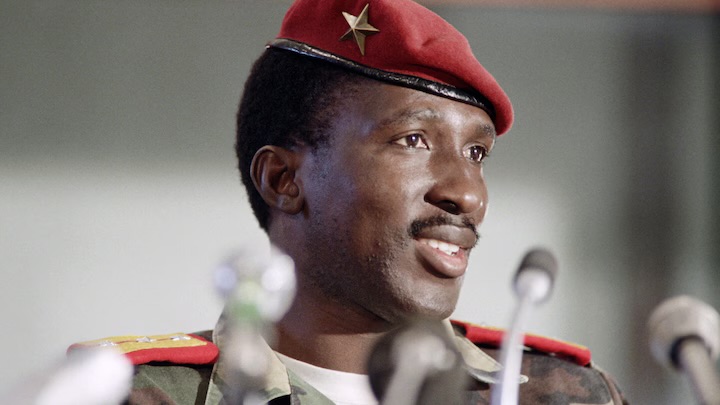
Thomas Sankara was born in 1949 in Burkina Faso, then known as Upper Volta. Trained as a military officer, he became known for his sharp political awareness and commitment to social justice. In 1983, at the age of 33, he came to power through a popular revolution, becoming one of Africa’s youngest heads of state. His leadership marked a decisive break from the country’s colonial past and its dependence on foreign influence.
A Vision of Self-Reliance
Central to Sankara’s ideas was the belief that Africa must depend on its own resources and capabilities. He rejected foreign aid that came with conditions, arguing that it often deepened dependency rather than supporting true development. Under his leadership, Burkina Faso pursued policies aimed at boosting local production, particularly in agriculture.
Sankara encouraged citizens to consume what they produced and produce what they consumed. This approach was not only economic but also symbolic, reflecting a broader call for dignity and independence across Africa.
Pan-African Unity and Anti-Imperialism
Sankara was a strong advocate of Pan-Africanism, the idea that African countries must unite politically and economically. He believed that the challenges facing African nations, including poverty and underdevelopment, could not be solved in isolation.
He was particularly vocal about the issue of external debt. In a famous speech at the Organization of African Unity, he called on African countries to collectively refuse to repay what he described as unjust debts imposed by former colonial powers and international institutions. He argued that united action would prevent any single country from being targeted or isolated.
Social Reforms and Governance
Sankara’s leadership was marked by wide-ranging reforms. He promoted education, healthcare, and women’s rights, making significant efforts to improve the lives of ordinary citizens. His government launched mass vaccination campaigns, built schools, and encouraged women’s participation in public life.
He also introduced policies aimed at reducing corruption and excess within government. Officials were expected to live modestly, and Sankara himself became known for his simple lifestyle, which reinforced his message of accountability.
Legacy and Lasting Influence
Despite his achievements, Sankara’s rule was cut short in 1987 when he was assassinated during a coup. His death marked the end of a brief but impactful period in Burkina Faso’s history.
Today, Thomas Sankara remains a powerful symbol of integrity, independence, and African unity. His ideas continue to influence political thought across the continent, particularly among young people who see in his leadership a model of courage and commitment to African progress.
His Pan-African vision, rooted in self-reliance, unity, and social justice, remains relevant. It raises an enduring question for Africa: can the continent achieve true development without first securing control over its own resources and direction?