For decades, the FIFA World Cup has remained football’s most exclusive club. Since the tournament began in 1930, every winner has come from either Europe or South America. Africa has produced legendary players, unforgettable moments, and passionate football cultures, yet the continent has never lifted the famous trophy.
That reality may soon be tested.
With a record ten African nations qualifying for the expanded 2026 FIFA World Cup, a question that once seemed unrealistic is now being discussed with growing seriousness: could an African country finally become world champion?
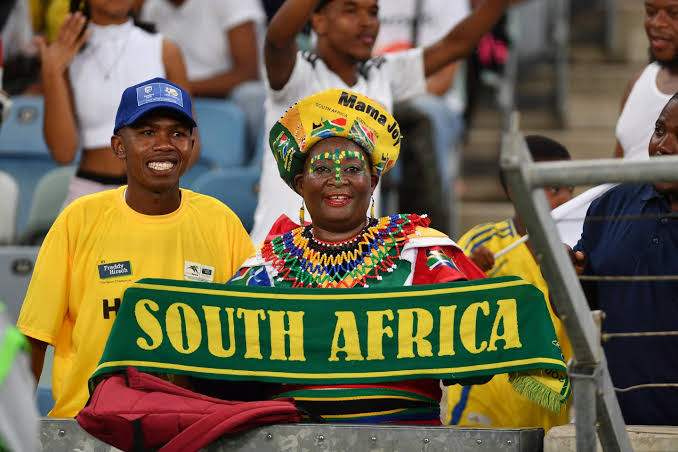
Morocco, Senegal, Ghana, South Africa, Tunisia, Egypt, Algeria, Cape Verde, DR Congo, and Côte d’Ivoire will carry the hopes of more than a billion Africans to North America. While winning the tournament remains a formidable challenge, there are compelling reasons why many supporters believe the continent’s breakthrough moment may be closer than ever.
How Africa Got Here
African football has travelled a long road.
When African nations first appeared at the World Cup, they were often viewed as outsiders with little chance of competing against football’s established powers. Over time, that perception began to change.
Cameroon stunned the world by reaching the quarterfinals in 1990. Senegal repeated the feat in 2002, defeating defending champions France along the way. Ghana came within a penalty kick of becoming Africa’s first semifinalist in 2010. Then came Morocco’s extraordinary run in Qatar in 2022, when the Atlas Lions became the first African and Arab nation to reach the semifinals of a World Cup.
That achievement altered the conversation. No longer was the question whether African teams could compete with the best. Morocco had shown they could defeat them.
Morocco Changed Everything
Morocco’s success in 2022 was not built on luck.
The team defeated Belgium, Spain, and Portugal while displaying tactical discipline, defensive organization, and remarkable resilience. More importantly, they proved that an African side could consistently overcome elite opponents in the knockout stages.
Their journey inspired football fans across the continent and raised expectations for what African teams might achieve in future tournaments.
Many observers believe Morocco will again enter the 2026 World Cup as one of Africa’s strongest contenders, led by world-class players competing at the highest levels of European football.
The Strength of the African Field
Morocco is not carrying the continent’s hopes alone.
Senegal remains one of Africa’s most complete teams, combining experience with emerging talent. Côte d’Ivoire enters the tournament with renewed confidence after its recent continental success. Egypt possesses one of the world’s most recognizable football stars in Mohamed Salah, while Algeria and Tunisia have repeatedly demonstrated their ability to challenge stronger opponents.
Ghana and South Africa continue to rebuild ambitious squads, while Cape Verde and DR Congo represent dangerous underdogs capable of causing surprises.
Unlike previous tournaments where Africa relied heavily on one or two leading nations, the continent enters 2026 with depth across multiple teams.
What Still Stands in the Way?
Despite the optimism, winning the World Cup remains one of sport’s most difficult achievements.
Traditional powers such as Argentina, France, Spain, Germany, Brazil, England, and Portugal still possess enormous advantages in squad depth, resources, and tournament experience. The pressure of navigating seven matches against the world’s best teams is immense.
Consistency has also been a challenge for African teams. Strong performances in one tournament have not always translated into sustained success in the next.
Another obstacle is the knockout stage itself, where a single mistake can end years of preparation.
Why 2026 Feels Different
Yet there is a growing sense that something has changed.
African footballers are no longer simply participants at the highest levels of the game. They are among its leading figures. Across Europe’s biggest leagues, African players are starring for elite clubs, winning major trophies, and gaining invaluable experience under the brightest lights.
The expanded 48-team format may also create new opportunities. More African teams will gain exposure to high-level competition, increasing the chances that at least one nation builds momentum deep into the tournament.
Perhaps most importantly, African teams now enter the World Cup with belief. The psychological barrier that once separated them from football’s traditional powers has weakened considerably.
A Dream Within Reach
Winning the World Cup remains an enormous task. No African nation has done it before, and history suggests the odds remain long.
But history is filled with achievements that once seemed impossible until someone accomplished them.
When Cameroon reached the quarterfinals in 1990, many thought Africa had reached its limit. When Ghana nearly reached the semifinals in 2010, the continent came even closer. Morocco pushed the boundary further in 2022.
The next step would be the biggest of all.
Whether it is Morocco, Senegal, Côte d’Ivoire, Egypt, Ghana, or another contender, Africa enters the 2026 World Cup with more representation, more talent, and more confidence than ever before.
The dream of an African world champion is no longer a fantasy discussed only by hopeful supporters. For the first time, it feels like a genuine possibility.
And that may be the most exciting story of the 2026 World Cup.