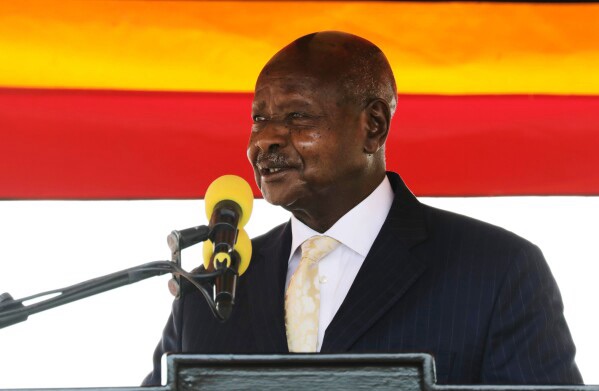
Uganda is facing renewed political debate after parliament passed a controversial new law aimed at protecting the country from what authorities describe as foreign interference. President Yoweri Museveni has praised lawmakers for supporting the measure, presenting it as necessary for national sovereignty and stability.
Supporters of the law argue that foreign influence in domestic affairs has become a growing concern across Africa. Governments on the continent have increasingly accused external actors, including foreign organisations and international advocacy groups, of attempting to shape political processes, influence public opinion, or interfere in governance.
From this perspective, the Ugandan government insists the legislation is designed to defend national interests and reduce outside pressure on internal affairs. Officials maintain that every sovereign state has the right to regulate activities that may threaten security or political independence.
However, critics see the situation differently.
Opposition groups, civil society organisations, and some political observers argue that the law may go beyond protecting sovereignty and instead become a tool for suppressing dissent. They fear that broad or unclear definitions of “foreign interference” could be used to target activists, journalists, non-governmental organisations, and political opponents.
This concern is particularly significant in a country where debates around political freedom and civic space have intensified in recent years. Critics argue that legislation framed around national security can sometimes create an environment where independent voices operate under fear or uncertainty.
There are also economic concerns. Uganda depends on international partnerships, foreign investment, and donor support in several sectors. Analysts warn that laws perceived as hostile to international engagement could affect investor confidence and strain diplomatic relationships. In an increasingly connected global economy, balancing sovereignty with openness remains a delicate task.
The debate therefore goes beyond one piece of legislation. It raises larger questions about governance in contemporary Africa. How should African states protect themselves from genuine external influence without weakening democratic freedoms at home? Where should the line between national security and political control be drawn?
For many observers, the answer lies in transparency and implementation. A law intended to protect sovereignty should not become a mechanism for silencing criticism or limiting legitimate civic activity.
The timing of the law has also drawn attention, especially as Uganda continues to navigate political tensions and discussions about succession, governance, and democratic participation under the long rule of Yoweri Museveni.
Ultimately, the controversy surrounding the legislation reflects a broader African challenge: how to defend national autonomy while still protecting political openness, economic confidence, and the right of citizens to speak freely.