Born in Maputo in 1975, Gonçalo Mabunda came of age during the Mozambican Civil War. That period left deep marks on the country and on those who lived through it. After the war, a national effort encouraged citizens to hand in weapons in exchange for useful tools. Mabunda became part of this moment. Rather than see these weapons destroyed or forgotten, he saw another possibility. He began to turn them into art.
The Nature of His Work
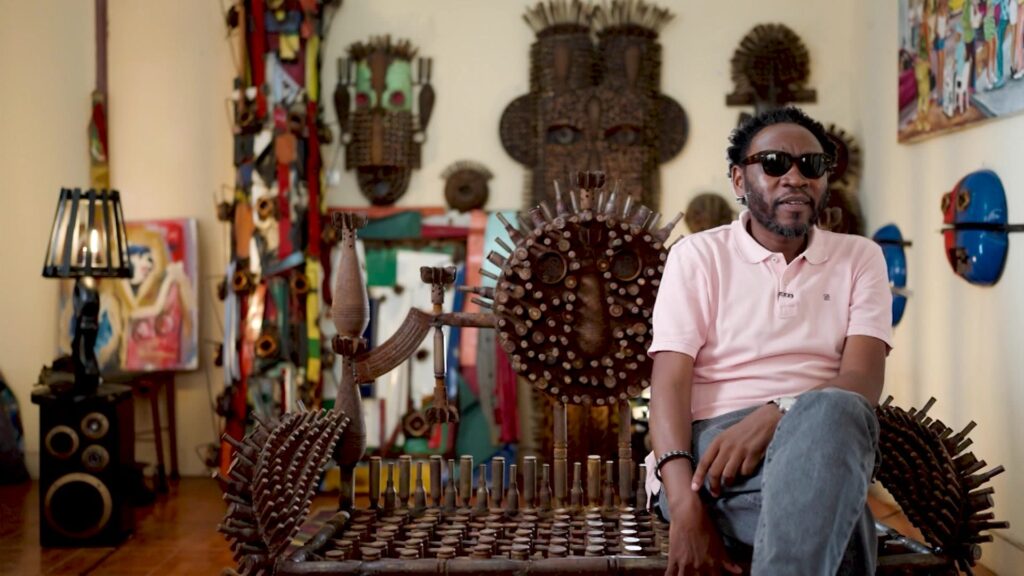
Mabunda works mainly with decommissioned weapons such as guns and ammunition. He welds these materials into sculptures that often take the form of chairs, masks, and human figures. One of his most striking ideas is the use of thrones made from rifles. These pieces draw attention to power and leadership, asking what kind of authority is built on violence.
His work is direct and easy to read, yet it carries strong meaning. The original materials are never hidden, so the past remains visible. This gives his art a certain weight. It does not allow the viewer to forget what these objects once did. Instead, it turns them into a space for thought and reflection.
Impact in Africa and Beyond
Mabunda’s work has reached audiences far outside Mozambique. His sculptures have been shown in major exhibitions across Europe and North America. Collectors and institutions continue to show interest in his pieces because of both their form and their message.
Within Africa, his work speaks to shared histories of conflict and recovery. It suggests that even painful pasts can lead to new forms of expression. Outside the continent, it pushes viewers to think about violence, memory, and responsibility in fresh ways.
If objects once used for harm can be turned into art, what other parts of our history should we rethink and give new meaning?