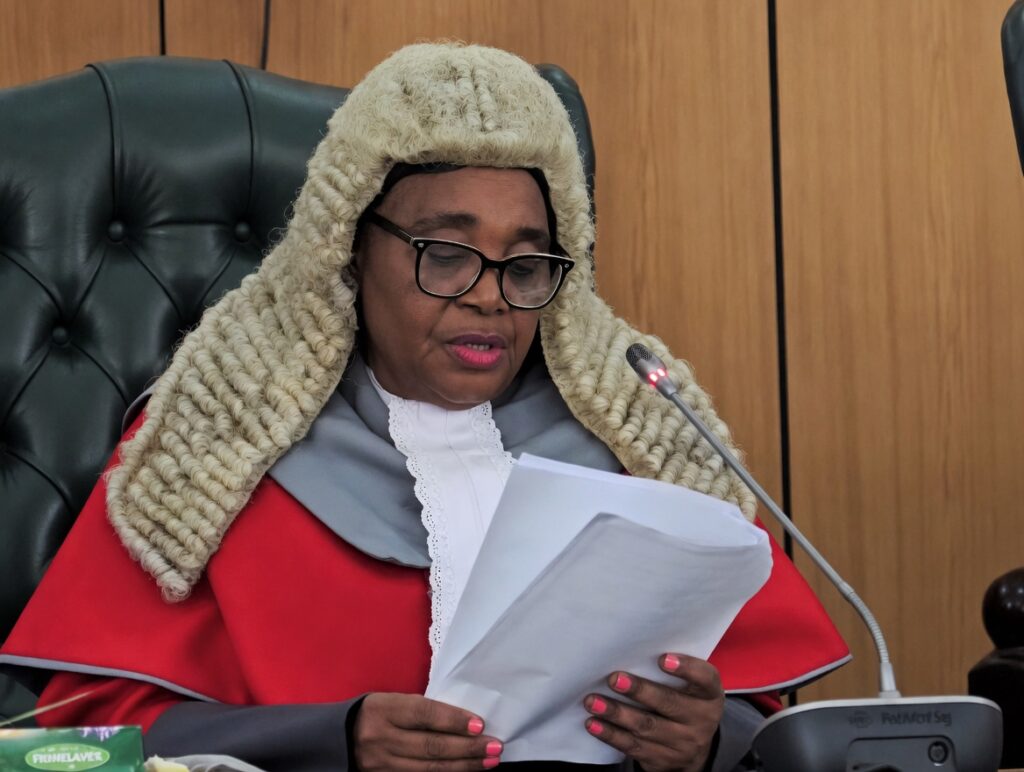
Zimbabwe has entered a historic chapter after President Emmerson Mnangagwa appointed Elizabeth Gwaunza as the country’s first female Chief Justice. The appointment comes 46 years after independence and marks a major milestone for women in Zimbabwe’s legal and political institutions.
Gwaunza succeeds former Chief Justice Luke Malaba, whose tenure ended after reaching the constitutional retirement age. Before this appointment, Gwaunza had already broken barriers as Zimbabwe’s first female Deputy Chief Justice, a position she held since 2018.
Why the Appointment Matters
On the surface, the development represents progress for gender inclusion in African leadership. Gwaunza’s legal career spans nearly four decades, including service as a High Court judge, Supreme Court judge, and even at the International Criminal Tribunal for the former Yugoslavia. She was also among the first Black women to graduate with a law degree in Zimbabwe.
For many women across Africa, her rise symbolises the gradual breaking of barriers in institutions historically dominated by men.
But beyond symbolism, the appointment carries enormous political significance.
A Judiciary Under Pressure
Gwaunza steps into office at a time when Zimbabwe’s judiciary faces growing public scrutiny. Critics, opposition groups, and civil society organisations have long questioned the independence of the courts, especially in politically sensitive cases involving elections, constitutional disputes, and media freedoms.
Her predecessor’s tenure was marked by controversy, particularly debates surrounding constitutional interpretation and judicial tenure extensions. Public trust in the judiciary has therefore become a central issue in Zimbabwean politics.
Reports indicate that within days of assuming office, Gwaunza may preside over major constitutional matters with serious political implications.
Symbolic Victory or Institutional Reform?
The key question now is whether this historic appointment will lead to deeper institutional credibility or remain largely symbolic.
Across Africa, the appointment of women into top judicial positions is increasingly becoming part of broader governance reforms. Yet representation alone does not automatically guarantee judicial independence or democratic accountability.
For Zimbabwe, the challenge goes beyond celebrating a “first female Chief Justice.” The real test lies in whether the judiciary can strengthen public confidence, uphold constitutional principles, and operate without political influence.
A Broader African Reflection
Gwaunza’s appointment also reflects a wider shift across Africa, where more women are taking leadership positions in law, politics, and governance. Countries such as South Africa and Kenya have also seen women rise within senior judicial structures.
Still, many Africans increasingly demand not just representation, but institutional integrity. Citizens want courts that protect rights, defend constitutions, and remain independent regardless of who holds political power.
For now, Zimbabwe celebrates a historic breakthrough. But history will likely judge this moment not only by the significance of the appointment itself, but by what follows after the celebrations end.