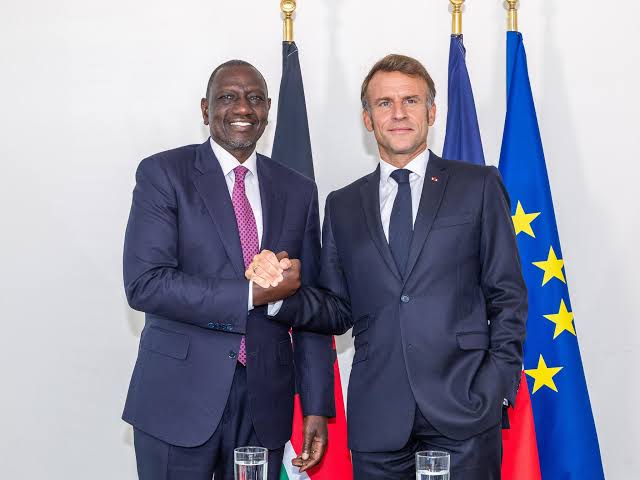
French President Emmanuel Macron’s recent visit to Kenya has sparked fresh debate across Africa after President William Ruto signed 11 agreements with France covering rail transport, ports, nuclear energy, fisheries, tea exports, and digital technology.
On the surface, the visit was presented as a win for investment and international cooperation. Cameras flashed, leaders smiled, and official statements spoke about partnership and development. But many Africans are asking a deeper question: who truly benefits when these deals are signed?
The agreements may be public, but the full details remain unclear. There has been limited parliamentary scrutiny and little public consultation. At a time when Kenyans are already burdened by rising taxes and economic pressure, citizens have every right to know the exact terms of agreements tied to their future.
This situation also fits into a larger historical pattern. Western powers have long approached Africa through the language of partnership while securing access to resources, markets, strategic locations, and political influence. From colonial extraction to modern debt arrangements and unequal trade systems, Africa’s relationship with the West has often favoured external interests more than African development.
France, in particular, has faced increasing resistance in parts of West Africa, where critics accuse Paris of maintaining economic and political influence long after colonialism officially ended. As French influence weakens in countries such as Mali, Burkina Faso, and Niger, attention now appears to be shifting toward East Africa, with Kenya becoming an important strategic partner.
The concern is not that Africa should reject foreign investment. Every country engages globally. The real issue is whether African leaders negotiate from a position of strength and transparency.
Unfortunately, history shows that many African governments have signed agreements that later placed their countries under debt pressure, weakened local industries, or handed strategic sectors to foreign control. Too often, ordinary citizens only discover the consequences years later.
Western countries protect their interests aggressively. The bigger problem is that many African leaders fail to protect African interests with the same seriousness.
If Africa truly wants economic independence, then transparency, accountability, and strong negotiation must become non-negotiable. Otherwise, the continent risks repeating old cycles where development is promised, but dependency quietly deepens beneath the surface.